
Every Man, Woman and Child in Guyana Must Become Oil-Minded – Column 144 – November 30, 2024

Exxon and Hess Give Thanks: A Turkey Named Guyana

Thanksgiving has been silently making its presence felt in Guyana with the Black Friday sale looked forward to by shoppers spending on things they do not need because they will save on Black Friday spending. The idea is an incident of Thanksgiving – a day dedicated by Americans for gratitude and feasting, celebrating their blessings and abundance.

This column can report that the celebration took on a uniquely Guyanese flavour in Exxon and Hess’s boardrooms. At their table, the centerpiece was not just a golden turkey lathered with Guyana oil, but the entire country of Guyana, with steam rising from its golden-brown oil wealth, its aroma drawing corporate vultures and shareholders to circle the feast. It was all made more sumptuous by a phalanx of politicians, professionals, regulatory institutions, and the national cricket franchise providing the stuffing – a mix of ingredients ensuring that the carving proceeded smoothly, with no obstacle along the way.

A Feast of Broken Promises

Before the 2020 elections, Guyana’s now President and chief Vice President thundered against selling out the national patrimony to ExxonMobil, Hess, and CNOOC. They promised to renegotiate terms to ensure fairness, national benefit, and justice. But once in power, these lofty promises dissipated into silence, replaced by the chant of “sanctity of contract.” The transformation mirrors the devastating betrayal of Native Americans centuries ago: invited to share their bounty under the guise of partnership, only to watch as disease decimated their populations, settlers seized their lands, and broken treaties shattered their sovereignty. Their feast of sharing became a near-genocidal tragedy.

Today, Guyana faces its own existential threats. While the weapons are not smallpox, blankets and muskets, the environmental degradation from oil spills and gas flaring poses similar dangers to national health. The economic exploitation through a skewed contract drains the nation’s wealth as surely as land theft impoverished Native nations. Adding cruel irony to injury, Guyanese citizens now face deportation from the United States under harsh immigration policies – forced to return to a homeland whose resources are being carved up by American corporations.

Politicians as the Stuffing

As every Thanksgiving host knows, stuffing is essential to the turkey. At Exxon’s table, a blend of political, legal and regulatory actors ensured that the feast remained undisturbed, each ingredient playing its part in this corporate banquet of exploitation. Here is the bio of some of these players.

The Politicians. Guyana’s political class forms the base of bland and backboneless stuffing crumbs, lacking substance but quick to soak up corporate arguments. These include the leaders who once promised renegotiation but now serve Guyana as the turkey on a platter, parroting Exxon’s line about frightening investors and ruining Guyana’s reputation. Their evolution from defenders to enablers was the toast of the occasion.

The Attorney General – Like spicy sausage, he adds energy and legalese to the stuffing. The AG’s role goes beyond passivity to active defense. In court actions challenging the environmental and contractual terms of oil operations, he frequently appears as a disguised advocate for the oil companies, wrapping corporate interests in the language of national benefit.

The EPA is like celery without the crunchiness, stringy and hollow, having lost its voice, brains, and direction. It fails to hold Exxon accountable for environmental risks, leaving citizens to bear the dangers of oil spills, flaring, and ecological degradation. Its weakness in the face of environmental threats speaks volumes about institutional capture.

Professionals and civil society. Most are like dried cranberries, adding a sheen of professionalism, patriotism and independence while helping to draft contracts, massage numbers and engage in creative writing to perpetuate the status quo. Only a rare few – willing to risk a plate at the table – stand up for the people, offering a faint but vital glimmer of resistance.

Amazon Warriors and their supporters. At the national sports stadium, cricket fans wave at foreign cricketers wearing the Exxon shirt alongside the Golden Arrowhead – nationalism slowly drowning in a sea of corporate branding.

Guyana on the Table

The turkey itself – Guyana’s oil wealth – is as vast as it is vulnerable. With billions of barrels in recoverable reserves, the country should be poised for transformative development. Yet the contract terms leave Guyana with only a fraction of the profits while requiring the nation to reimburse the oil companies for their expenses, including taxes paid abroad.

No Thanksgiving feast is complete without a drink, and Exxon and Hess have the perfect accompaniment: Guyana’s light sweet crude. Former Minister Raphael Trotman once remarked that it is “so sweet you can almost drink it.” And drink it, Exxon and Hess do – straight from the source, savouring every drop as Guyanese have no clue of their operations and how they manage ceded sovereignty. For them, Guyana oil is not just raw crude to be refined but is the driver of profits and dividends for Americans and crumbs for Guyanese.

A New Threat to Sovereignty

Now U.S. lawyers press to practise their trade in Guyana, violating the Local Content Act and national and regional arrangements governing the training and practice of lawyers. This mirrors historical patterns of external forces seeking to dominate Guyana’s resources and institutions. Such an incursion would dilute local legal services and undermine the very laws meant to protect the country. Like the Exxon contract, this demand represents yet another attempt to erode Guyana’s sovereignty under the guise of progress and partnership.

A Call for Courage

Contracts are not sacred texts. They are tools created by humans to be revisited when they fail to serve the greater good. Guyana’s leaders must break free from serving at the Thanksgiving feast to fulfill their sacred duty as guardians of the nation’s sovereignty and resources.

To end the epicurean analogy, Guyana needs more vegetarians, unwilling to participate in Exxon’s feast. While Exxon & Co carve up Guyana’s wealth and politicians line up as ingredients, the vegetarians stand apart, untempted by this gluttonous banquet. Their conscience, like their diet, refuses to consume what is tainted by exploitation.

Every Man, Woman and Child in Guyana Must Become Oil-Minded – Column 143 – November 8, 2024

Trump’s Victory a reality check for Guyana

Introduction


The world continues to process the stunning outcome of Tuesday’s U.S. presidential election, with Donald Trump’s unexpected return to power sending shockwaves through global markets. While the political implications are far-reaching, the focus of this column is an examination of what Trump’s presidency means for the oil and gas sector, particularly given the lessons learned from his first term. The landscape has shifted significantly for Guyana since 2016 – we now stand as an oil producer rather than merely a regional observer, making both historical lessons and future prospects increasingly relevant to our national interests.


The immediate market reaction to Trump’s victory was telling, with both major oil benchmarks showing significant decline. Brent crude dropped 61 US cents to $74.92 per barrel, while West Texas Intermediate fell to $71.69. Citi’s forecast of continued downward pressure through 2025 poses particular challenges for Guyana, which has embarked on ambitious spending plans based on previously optimistic price projections. The potential drop to around US$60 per barrel from July 2024’s high of US$84 represents a concerning 30% decline that could severely impact our budgetary plans, especially as the government contemplates significant payouts to citizens ahead of our 2025 elections.

Trump’s impact


Trump’s potential impact on oil prices presents several counterbalancing forces. At home, his renewed “drill, baby, drill” agenda and promised deregulation of U.S. oil production could increase global supply. Abroad however, there can be offsetting events and activities. Trump had boasted that the war in Ukraine would end almost immediately, possibly putting upward pressure on oil prices by enabling global economic recovery and increasing energy demand. On the other hand, if this leads to the end of sanctions imposed on Russian products, it could result in an increase in supply. It is unlikely that Iran will return to the international market while continuing turmoil in Venezuela is hardly likely to see any significant oil coming to the international market.


For Guyana, this complex dynamic intersects with both structural and regional challenges. Based on its own perverse logic, the Government failed to apply ringfencing between production and prospecting activities. As we have explained in these columns, Guyana is in fact subsidising exploration activities today in the hope that the rewards in the future will make the sacrifice worthwhile. Well, Trump 2 makes that future look far less rosy, and we are now staring at the prospects of 14.5% take each year for an extended period. The PPP/C has become drunk with oil and never for a moment did it consider how vulnerable the 2016 Agreement makes the country to oil price fluctuations. Setting this aside however, Guyana’s position differs markedly from our Caribbean neighbors – while they continue to grapple with energy security concerns, as they did during Trump’s first term, we now face the challenges of managing newfound oil wealth.

Guyana’s response


Trump’s election poses a challenge to Guyana’s policymakers who will have to carefully navigate his mercurial temperament and transactional approach to everything. The challenges outweigh the opportunities. While other Caribbean nations must again brace for potential impacts on development assistance and trade relationships, Guyana needs to balance these regional concerns with our position as an emerging oil producer.
The mixed outlook following Trump’s re-election requires us to focus on those areas within our control: improving our regulatory oversight, building fiscal buffers where possible, and continuing to develop our broader economy. The experience of Trump’s first term shows the importance of preparing for policy volatility while maintaining regional relationships and economic diversification efforts.


The need to diversify the economy has not received the attention it deserved. Sadly, it may now be too late as the Dutch Disease has touched almost every sector of the economy. If ever there was a need to call for the renegotiation of the 2016 Agreement, it is now too late. Routledge will report us to State Department and there will be a call to Georgetown to keep the natives in line. If ever there was need for careful financial planning, management and control, the runaway spending train has already left the station. If ever it was important to draw the line between current expenditure and intergenerational savings, the automatic drawdown level has been set to high.


As the world contemplates Trump 2, Guyana faces some real challenges. The week has been transformational, and the only hope is that things will not be as bad as they seem.

Every Man, Woman and Child in Guyana Must Become Oil-Minded – Column 142 – November 2, 2024

Renegotiations, Referendums, and Reality – response to Ram & McRae’s Survey

Introduction


The response to Ram & McRae’s recent survey on the 2016 Petroleum Agreement was revealing, particularly Vice President Bharrat Jagdeo’s immediate dismissal of its findings and his attempt to shut down any discussion of a referendum. His reaction betrays a troubling resistance to public discourse about Guyana’s most valuable natural resource.

Let us be clear: it is not within any VP’s power to decide whether Guyanese can have a referendum. The Constitution establishes referendums as a democratic tool, with such decisions resting with the National Assembly and the President, not with a party official, however high up. While Mr. Jagdeo is the General Secretary of the ruling party, he is not even the First Vice President – that position belongs to Brigadier Mark Phillips by virtue of his position as Prime Minister.

Campaign Promises vs. Current Reality


Mr. Jagdeo’s dismissal of a referendum on the Agreement is particularly revealing, given his party’s explicit promises during the 2020 election campaign. The PPP/C’s manifesto and numerous campaign speeches promised not just to review but to actively renegotiate the contract’s terms. Now, the VP attempts to rewrite history, claiming “we showed that we can get more out of the contract” through peripheral arrangements like the gas-to-energy project and Local Content Law.

The evidence suggests otherwise. The gas-to-energy project’s terms remain outside of the 2016 Agreement and are troublingly opaque, with mounting questions about its actual cost to Guyanese taxpayers. Even the Local Content Law is defined far too broadly, and the promised review due in 2023 has still not been done. And while essential for domestic business participation, it does nothing to address the Agreement’s fundamental inequities. Most critically, the cost recovery provisions still allow operators to claim up to 75% of revenues, leaving Guyana with a diminished share of its resource wealth, environmental protections remain inadequate, and worse of all, Jagdeo and the PPP/C are placing the myth of sanctity of contract over national sovereignty. Please see columns 133 – 135. Egregiously, the country is without the all-important Petroleum Commission, with the unacceptable substitute being the VP himself and the Ministry of Natural Resources, with its poor track record.

The VP’s claim that a referendum would “complicate” the electoral process defies constitutional precedent and global democratic practice. Numerous countries, including several Caribbean nations, routinely conduct referendums alongside national elections, recognising both the cost efficiency and democratic value of such exercises. The actual “complication” appears to be his reluctance to face the electorate’s direct verdict on this crucial issue and his own stewardship of the sector.

“Suspect” Survey


Mr. Jagdeo’s description of the survey as “suspect” demands examination. The survey itself was a global survey using Google Forms. Additionally, it was distributed to all leading members of private sector organisations and political parties in Guyana – including the PPP/C, where he serves as long-term General Secretary. If the results are “suspect,” one must ask why his party and supporters, who received direct invitations, chose not to participate and offer opposing views.

Understanding Survey Methodology


Meanwhile, Mr. Freddie Kissoon’s critique in the state-owned media reveals mistaken facts relevant to his academic training and fundamental misunderstandings about research methodology. He confuses basic facts, citing wrong numbers and mischaracterising the nature of the initiative. A survey serves different purposes from a poll – it gathers detailed information and insights about specific issues rather than predicting population-wide views. Our exercise was explicitly designed as a consultative survey seeking informed stakeholder feedback about particular aspects of the Petroleum Agreement. The valuable responses received, including a detailed technical analysis of contract provisions, demonstrate the success of this approach.

Conclusion


The passionate reactions to this survey from high officials and their supporters suggest it has struck a nerve. The underlying message resonates clearly: there is substantial public concern about the Agreement’s terms, and these concerns cannot be dismissed through procedural objections or deflections about methodology.


Its findings present a critical test of our democratic principles. The Ali Administration’s resistance to discussing modifications to an Agreement that will shape Guyana’s fortunes for generations reveals a troubling gap between democratic rhetoric and practice. Their continued refusal to engage with these concerns suggests a deeply worrisome possibility: they fear what a genuinely informed and empowered electorate might decide about an Agreement that will shape Guyana’s destiny for the remainder of this century and beyond. Their resistance to democratic consultation raises the profound question of whether they truly serve the interests of the Guyanese people or other, less public interests.

Every Man, Woman and Child in Guyana Must Become Oil-Minded – Column 141 – October 25, 2024

Introduction

Survey Shows Overwhelming Support for Renegotiation of Petroleum Agreement

Introduction

The results of a recent survey on the 2016 Petroleum Agreement with ExxonMobil and partners reveal overwhelming public support for renegotiation, with serious concerns about key provisions of the Agreement. The survey, conducted by Ram & McRae using the Google Forms platform  attracted 135 responses from a diverse group of respondents including professionals, academics, students and citizens, provides compelling evidence that the Government’s “sanctity of contract” position is at odds with public sentiment.

Key Findings

An overwhelming 94% of respondents believe the Government should seek to amend the current Petroleum Agreement, with only 6% either opposed or unsure. This stark statistic alone should give pause to those who continue to defend the status quo. The survey revealed that only 3.8% of respondents were satisfied with the existing provisions of the Agreement. The remaining 96.2% identified multiple areas requiring modification:

  • 83.2% want the royalty rate revised
  • 79.4% called for changes to tax payment arrangements
  • 66.4% seek modifications to tax certificates
  • 66.4% want the revenue guarantee revised
  • 61.8% support ring-fencing provisions

Governance and Oversight

On the critical question of oversight, nearly half (49.6%) of respondents favor a fully independent Petroleum Commission, while 44.4% support a combination of government and independent oversight. Only a small minority supported exclusive political control, highlighting the public’s disfavour of the current arrangements under which Vice President Jagdeo reigns supreme to the exclusion of everyone else.

The survey also revealed deep concerns about the Natural Resource Fund’s withdrawal rules. A mere 9.8% consider the current withdrawal levels appropriate. Maybe respondents are alert to the fact that under a 2023 amendment to the Natural Resources Fund Act, almost the entire amount of the first US$2,000 Mn. from profit share and royalty can be withdrawn and spent – no questions asked. It is ironic that the beneficiaries of this profligacy are arguing that more ought to be left in the Fund as intergenerational savings.

Fairness and Profit-Sharing

When presented with actual data showing Guyana’s modest and mildly declining share of oil lifts (from 13.04% in 2020-21 to 11.97% in 2023), an overwhelming 87.8% of respondents rated the current profit-sharing arrangement as either “somewhat unfair” or “very unfair.” Only 3.1% considered it fair, providing a clear mandate for revision of these terms.

Obstacles to Change

Asked to give their views on what they consider the key obstacles to renegotiation, respondent cited as the principal reason identified as the top reasons the following:

  • lack of political will (80.3%)
  • fear of potential economic repercussions (53%)
  • diplomatic concerns (44.7%)
  • Legal constraints 37.9%).

The reasonable inference to be drawn from “Legal Constraints” is a reference to the sanctity argument so warmly embraced by the Government in place of their commitment to “review and renegotiate”!

Public Awareness

A striking 86.5% of respondents believe there is insufficient public awareness about the Agreement’s specific provisions. This suggests that greater public education could further strengthen the case for renegotiation. It is however surprising for another reason: no day passes without a news article and more making adverse comments on the Agreement. 

Article 31.2 and Path Forward

While 53% of respondents were aware of Article 31.2 of the Agreement which allows for amendments with contractor consent, 47.4% view the current silence on invoking this provision as a missed opportunity by the Government to seek and obtain better terms. The main factors contributing to this silence were identified as:

  • Lack of public awareness (72.5%)
  • Political reluctance to challenge powerful oil companies (62.6%)
  • Inadequate technical capacity (35.9%)
  • Fear of damaging Guyana’s reputation (33.6%)

Conclusion

The survey results paint a clear picture: there is strong public support for renegotiating the 2016 Petroleum Agreement. The current “sanctity of contract” stance by the Government which had promised to renegotiate the Agreement appears increasingly untenable in the face of such overwhelming public sentiment for change. As one respondent noted, “The supremacy of Guyana’s Sovereign tax laws should be maintained. The contract broke one law to install another.”

The challenge which Guyana faces is to translate the strong and compelling public sentiment expressed in this survey into political action. Neither of the two major political parties has given Guyanese any reason to suggest that they are prepared to take decisive action to change this lopsided and penal arrangement. With general elections approaching in 2025, political parties would do well to heed these findings and recognise that the public’s patience with contemplating living with the 2016 Agreement beyond the middle of this decade is fast evaporating.

Every Man, Woman and Child in Guyana Must Become Oil-Minded – Column 140 – October 18, 2024

Exxon and Partners – Relinquishment Time

Introduction

President Irfaan Ali enjoys his encounters with international journalists, including BBC’s Steve Sackur and more recently New York Times’ International Climate Correspondent, Somini Sengupta. While the President has ably navigated the questions posed to him, he has benefitted from some important questions which Sackur and Sengupta failed to ask – like how he moved from “renegotiation” to “sanctity of contract.” Or the reason(s) for his country’s refusal to join more than 90% of the open countries of the world in signing the global Framework imposing a minimum corporation tax rate of 15% on companies like Exxon, Hess and CNOOC. Whether intended or otherwise, the beneficiaries are the oil companies, the sufferer being Guyana, It now begs the question whether a local journalist would raise these vital topics.

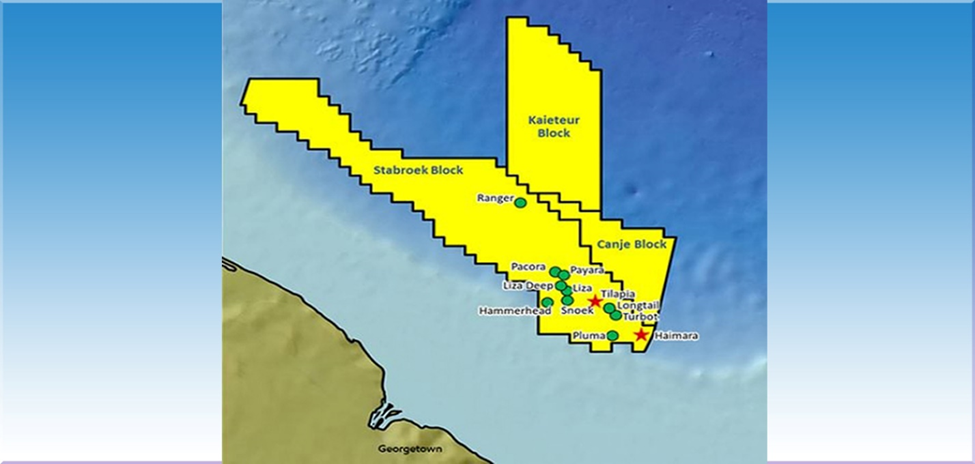
As if the 2016 Agreement is not sweet enough – no taxes, low royalty and a 40-year stability –  there is the relinquishment provision which gives Exxon almost exclusive control of the country’s most important sector for decades to come. While Exxon headlines the Stabroek Block, it controls the equivalent of 21% of Guyana’s total area of 83,000 square miles, through its involvement in the Stabroek Block, the Canje Block and the Kaieteur Block. With the exception of the East India Company up to 1857, there are no comparable statistics anywhere in the world, where a company enjoyed such dominant control over any country.

Contract Administration  

Having resiled from its renegotiation commitment, the Administration, ignoring the signal failures identified below, boasts about its contract administration, meaning how the Ministry of Natural Resources oversee the operation of the various Petroleum Agreements entered into by the Government of Guyana. Each and every failure comes at a cost and while the focus has understandably been about the Stabroek Block, it has detracted from Exxon’s role in two other blocks – the Kaieteur Block and the Canje Block, with significantly smaller areas than Stabroek.

Contract administration is a critical aspect of resource management, where the State must ensure that contractors fully meet their legal, fiscal, environmental and other obligations under their Agreements. Equally important is avoiding situations where, through poor oversight, negligence, or incompetence, companies receive greater benefits and more latitude than are legally permissible. Unfortunately, from the very inception of the 2016 Agreement, there have been concerning lapses in administration.

Contract failures and relinquishment

Raphael Trotman allowed Exxon to claim US$460 million in pre-contract costs, significantly more than their own financial statements revealed. Eight years after the Agreement was signed, not a single Ministerial audit has been completed, with only two audits combining several years instead of the required seven annual audits. Then there is the case of a staggering sum of US$211 million of unsupported expenditure being cleared at an administrative level rather than by the Minister of Natural Resources. These issues are facilitated by inadequate accounting and reporting, weak and permissive environmental oversight, and a lack of disclosure and accountability.

Another critical failure is in the handling of relinquishment provisions under the various Petroleum Agreements. “Relinquishment” refers to the obligation of oil companies to give up, within no more than ten years, the area over which they are granted a prospecting licence. This provision is crucial for ensuring that areas not explored, or which are proven unproductive are returned to the State, allowing for potential reassignment or conservation.

To understand the scale of this issue, let us examine the three Blocks where Esso is the Operator. According to the Guyana Geology and Mines Commission, these Blocks are as follows:

First, two quick asides. Exxon was permitted extraordinary latitude under the relinquishment clause of the 1999 Agreement, and now, under the legally questionable 2016 Agreement, it is allowed seven years instead of the usual four before it relinquishes any of the vast blocks it was awarded. Utilising an exception permitted in the then law, all that is required of Exxon after four years is to request a renewal, without any obligation to relinquish.

At the end of this renewal period, which lasts for three years, Exxon must request a further three-year renewal but must relinquish at least 20% of the original Contract Area, excluding Discovery and Production Areas. The retained area should comprise no more than two discrete areas, no piece by piece. At the end of that second renewal period, i.e., after 10 years, Exxon shall relinquish the entire Contract Area, with the exception of Production and Discovery Areas and Areas under Appraisal Programmes.

The Agreement was signed, dated and executed on 27th June 2016 but notarised on 7/10/2016 – which can be interpreted as 7th October 2016, or 10th July 2016. Even if we accept the word of Exxon’s former clandestine public official doing secret PR work for the company, Exxon should have given up 20% of the Stabroek Block no later than 7th October of this month. The big question is whether any such relinquishment has been effected.

For the Canje Block, 20% of the contract area should have been handed back by 4th March 2019, and another 20% by 4th March 2022, with the remainder to be handed back by March 2025. For the Kaieteur Block, 20% of the contract area should have been handed back by 28th April 2019 and another 20% by April 2022, with the remainder to be handed back by April 2025.

Question of Administration

All companies awarded petroleum agreements must apply for renewal of their licenses before the current period ends. This is crucial because each renewal comes with the obligation to give back (relinquish) part of the area they control. In this regard, I do not recall any public disclosure of timely applications for renewals, the extent of the relinquishments and whether the applications were granted.

The administration of the petroleum agreements covering vast areas of Guyana’s territory is about the country’s sovereignty as well as our national patrimony. The public has a right to know how these areas are being managed. Any carelessness in administration comes at a huge cost to Guyana, and by not enforcing relinquishments as stipulated, the country can lose opportunities to re-auction areas bringing in substantial revenues since the country is de-risked.

Conclusion

The administration of Guyana’s oil blocks reveals a complex picture of rapid development coupled with significant challenges. While the success of the Stabroek Block has brought benefits, the apparent lack of enforcement of relinquishment provisions in other blocks raises serious concerns about the overall management of our oil resources.

Next week, we will look at the Prime Minister Samuel Hind’s defence of Exxon.