
…flags lack of independent supervision
…no accountability safeguards and clear lending priorities
…says $40B at risk
(Kaieteur News) – The proposed Guyana Development Bank may be a promising initiative aimed at supporting small and medium-sized enterprises (SMEs), but Chartered Accountant and Attorney Christopher Ram is warning that flaws in the legislation governing the institution could leave billions of taxpayers’ dollars vulnerable to misuse.
In an invited comment, Ram, an advocate for good governance told this publication that the proposed legislation raises serious concerns about governance, accountability and financial prudence.
He said, “The most troubling feature is that the Bank is exempt from the Financial Institutions Act and therefore from oversight by the Bank of Guyana. Unlike every other financial institution, it will not be subject to independent prudential supervision, inspections or regulatory intervention. With $40 billion of taxpayers’ money at stake, this is a significant weakness.”

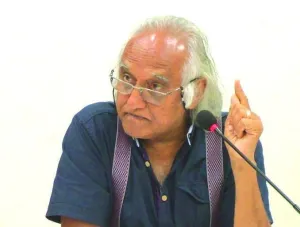
Chartered Accountant and Attorney, Christopher Ram
Ram went on to point out that governance is another concern. The lawyer explained that the Bill tabled in the National Assembly lays the foundation for the Finance Minister to appoint all directors, including the Chairperson and Deputy Chairperson. ‘That concentration of authority is particularly troubling given his well-documented history of delayed appointments to statutory bodies and institutions under his oversight. Ironically, the same Minister was once a vocal critic of similar shortcomings when they occurred under the previous administration,” Ram said.
Additionally, the attorney noted that the Guyana Development Bank also falls outside of the Companies Act. As such, the lawyer flagged that the legislation contains no statutory indemnity for directors acting in good faith and omits many of the governance safeguards normally associated with corporate entities.
Kaieteur News reported in an article on Sunday that no penalties have been included for rogue banking officials that may seek kickbacks or special favours for granting loans to members of the public.
Equally concerning for the attorney is the areas not covered by the Bill. Ram said, “It establishes a $40 billion development bank without identifying lending priorities or sectors that should be targeted.”
Additionally, Ram highlighted that the proposed law does not explain how losses will be financed or risks shared in co-financing arrangements.
He concluded, “There is a good idea at the heart of this Bill. Unfortunately, a good idea is not a substitute for good legislation. A Development Bank entrusted with $40 billion of public funds requires stronger governance, clearer accountability and independent oversight.” Consequently, Ram suggested that the Bill needed more consultation and scrutiny before being laid in the National Assembly.
Proposed legislation to govern the Guyana Development Bank was on Friday afternoon tabled in the National Assembly by an energetic Finance Minister, Dr. Ashni Kumar Singh.
News of the financial institution sparked excitement among Guyanese as the Government of Guyana (GoG) marketed the facility as one that would offer zero interest on loans up to $3 million with no collateral required.
The legal framework however reveals a different picture than that promised by government.
According to Section 5 (2) of the Bill, “Subject to the other provisions of this Act, the Bank may- (a) assist small and medium-sized enterprises in establishing, carrying on or expanding their operations by providing loans with or without collateral and with or without charging interest.”
The proposed law does not clearly outline what specific projects will require collateral or attract interest and at what specific rates.
Moreover, $40B or approximately US$200M initially – as the sum can be revised in Parliament – will be disbursed at the sole discretion of government appointees. The Bill makes no provision for any nominees to be submitted by the Opposition, civil society or any transparency bodies, raising concerns over the direct control of billions by the administration and the likelihood of selection based on “political alliance”.